Returns are the quiet tax on every online store. A shopper buys, the product arrives, it isn’t what they pictured, and it goes back, taking your margin, your shipping cost, and your time with it. In 2025, US consumers returned roughly $849.9 billion in merchandise, about 15.8% of all retail sales. For online-only categories the picture is worse: apparel returns run 20-40%, and furniture and home goods aren’t far behind.
Augmented reality (AR) product visualization attacks the root cause of most of those returns, the gap between what a shopper expects and what actually shows up at the door. This article explains why that gap exists, how AR closes it, and what the data says about the impact on your return rate.
Why products get returned
Not all returns are avoidable. Some are wrong sizes, some are genuine defects, some are buyers who ordered three options intending to keep one. But a large and preventable share come down to a single problem: the product didn’t match the shopper’s mental image.
Flat photos, however good, can’t convey scale, proportion, texture, or how something looks in a real room. A sofa looks perfect on a white studio background and then dwarfs the living room. A “walnut” finish reads darker in person. A pair of shoes photographs sleek and arrives chunky. In each case the buyer did nothing wrong, they simply had incomplete information at the moment of purchase.
This is “expectation mismatch,” and it’s expensive precisely because it’s systematic. Better photography and longer descriptions help at the margins, but they can’t let a shopper check a product against their own space and their own expectations. AR can.
What is AR product visualization?
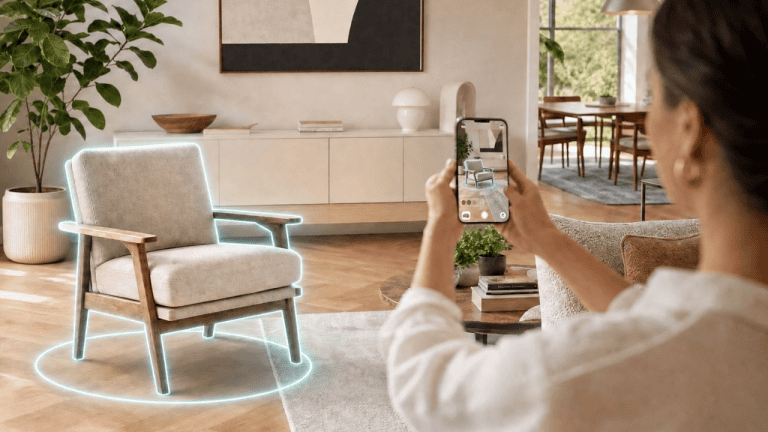
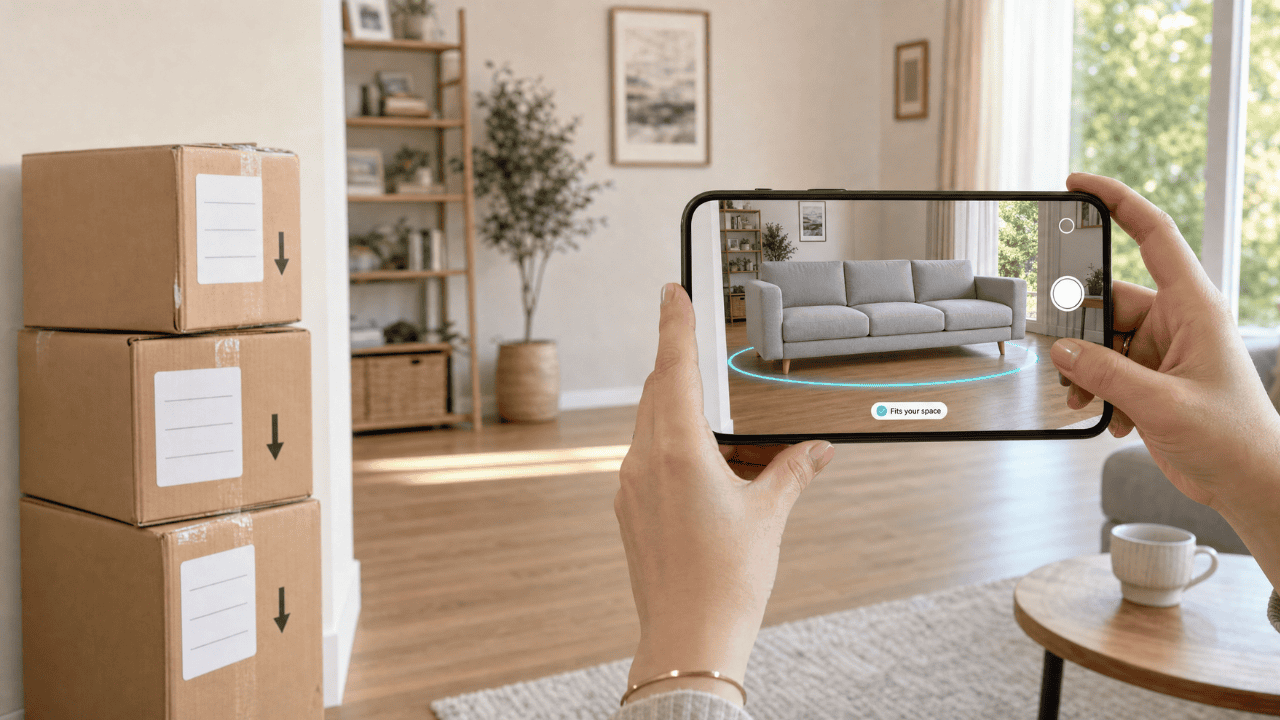
AR product visualization places a true-to-scale 3D model of your product into the shopper’s real environment, viewed through their phone or tablet camera. A customer shopping for a chair can point their phone at the floor and see the chair standing there, at full size, from every angle. Someone buying a watch can see it on their own wrist.
Because it’s browser-based (WebAR), there’s no app to download, the shopper taps a button on your product page and the experience opens in the camera. That accessibility matters: it means AR is available to roughly 90%+ of shoppers on a modern smartphone, not just the few who’d install a dedicated app. (For the full picture, see our guide to augmented reality for ecommerce and our WebAR platform guide.)
How AR reduces returns
AR reduces returns through three connected mechanisms.
- It gives shoppers accurate information before they buy. Seeing a product at true scale, in context, from every angle answers the exact questions that drive mismatch returns: Will it fit? Is the color right? Is it bigger than I think? The buyer resolves those doubts before checkout instead of after delivery.
- It builds purchase confidence. Research consistently finds that AR increases product knowledge and reduces the uncertainty shoppers feel at the point of decision. Confident buyers make better-matched choices, and are far less likely to send the product back.
- It sets realistic expectations. When the version a shopper saw in AR matches what arrives, there’s no unpleasant surprise. Expectation and reality line up, which is the whole game when it comes to returns.
What the data says
The numbers behind AR and returns are consistent across multiple sources:
- Shopify reports that 3D and AR product media can reduce returns by up to 40%.
- A survey of more than 4,000 shoppers commissioned by Snap and Publicis Media found that two-thirds of consumers are less likely to return a product after using an AR feature.
- Retailers using AR/VR for marketing have reported around a 25% decrease in product returns alongside higher conversion.
- Macy’s found that AR/VR furniture visualization in pilot stores drove a 60% larger average basket and 25% fewer returns.
The same tools that cut returns also lift sales: products with 3D/AR content convert at a 94% higher rate on Shopify, and shoppers are 65% more likely to place an order after interacting with a product in AR. Reducing returns and increasing conversion turn out to be the same investment.
Where AR has the biggest impact on returns
AR pays off most in categories where mismatch returns are common and expensive:
- Furniture and home: scale and fit in a real room are the top return drivers, and AR shows both directly.
- Lighting and décor: appearance in the buyer’s actual space matters more than a studio shot.
- Industrial and B2B equipment: buyers can confirm dimensions and clearances on site before committing.
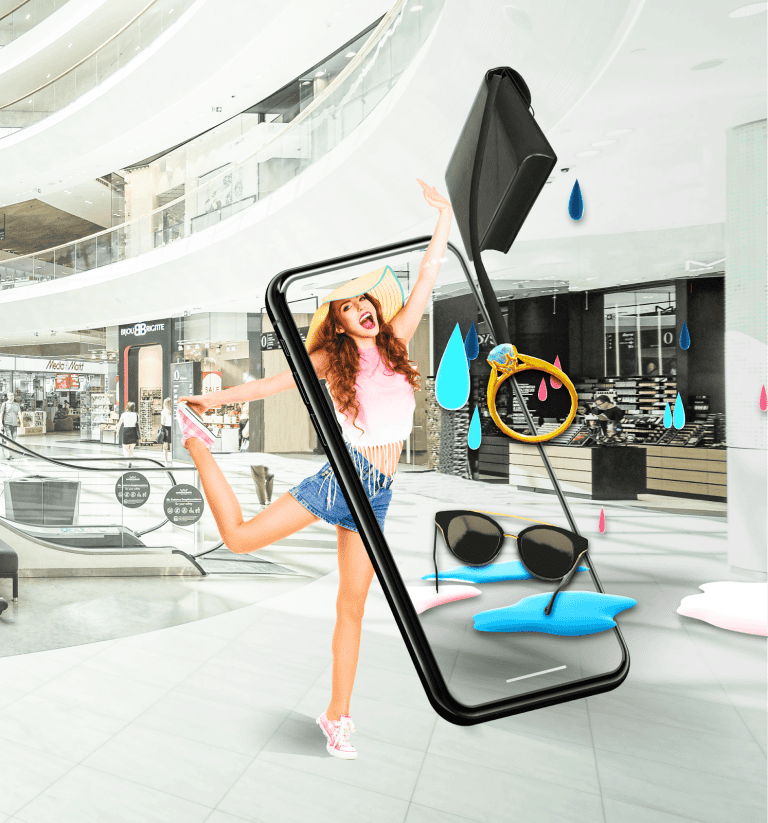
- Fashion, footwear, and accessories: virtual try-on lets shoppers judge look and proportion on themselves.
Getting started with AR
Reducing returns with AR no longer requires an app build or a development team. With a no-code, browser-based platform like Plattar, your team can turn existing photos, 3D models or CAD files into WebAR experiences and embed them into your product pages, with no download barrier for the shopper and no ongoing developer cost for you.
Want to see how much of your return rate is preventable? Book a demo now.
Frequently asked questions
Can augmented reality really reduce product returns?
Yes. By letting shoppers see a product at true scale and in their own environment before buying, AR closes the gap between expectation and reality that causes most preventable returns. Industry data shows reductions of up to 40%, and two-thirds of shoppers say they’re less likely to return a product after using AR.
How does AR reduce returns specifically?
It gives buyers accurate pre-purchase information, builds their confidence in the decision, and sets realistic expectations, so the product that arrives matches the one they chose.
Which product categories see the biggest return reduction?
Furniture, home goods, fashion and footwear, lighting, and B2B equipment, categories where size, fit, color, or fit-in-space drive returns.
Do shoppers need an app to use AR?
No. WebAR runs in the phone’s browser, so shoppers tap a button on your product page and the AR experience opens in their camera, nothing to install.
Is AR expensive to implement?
Not with a no-code platform. Existing 3D models or CAD files can be turned into WebAR experiences and embedded without a custom app build or a dedicated development team.
Does reducing returns come at the cost of fewer sales?
No, the opposite. The same 3D and AR content that reduces returns also lifts conversion, because confident, well-informed shoppers both buy more and return less.
See the return impact for your own products: book a demo or read our complete guide to AR for ecommerce.
We'll build you a bespoke demo around your own website and your own range, and answer any of the questions in this post.
Request a Demo